South Sudan aid cliff exposes wider funding squeeze for displaced people in Africa
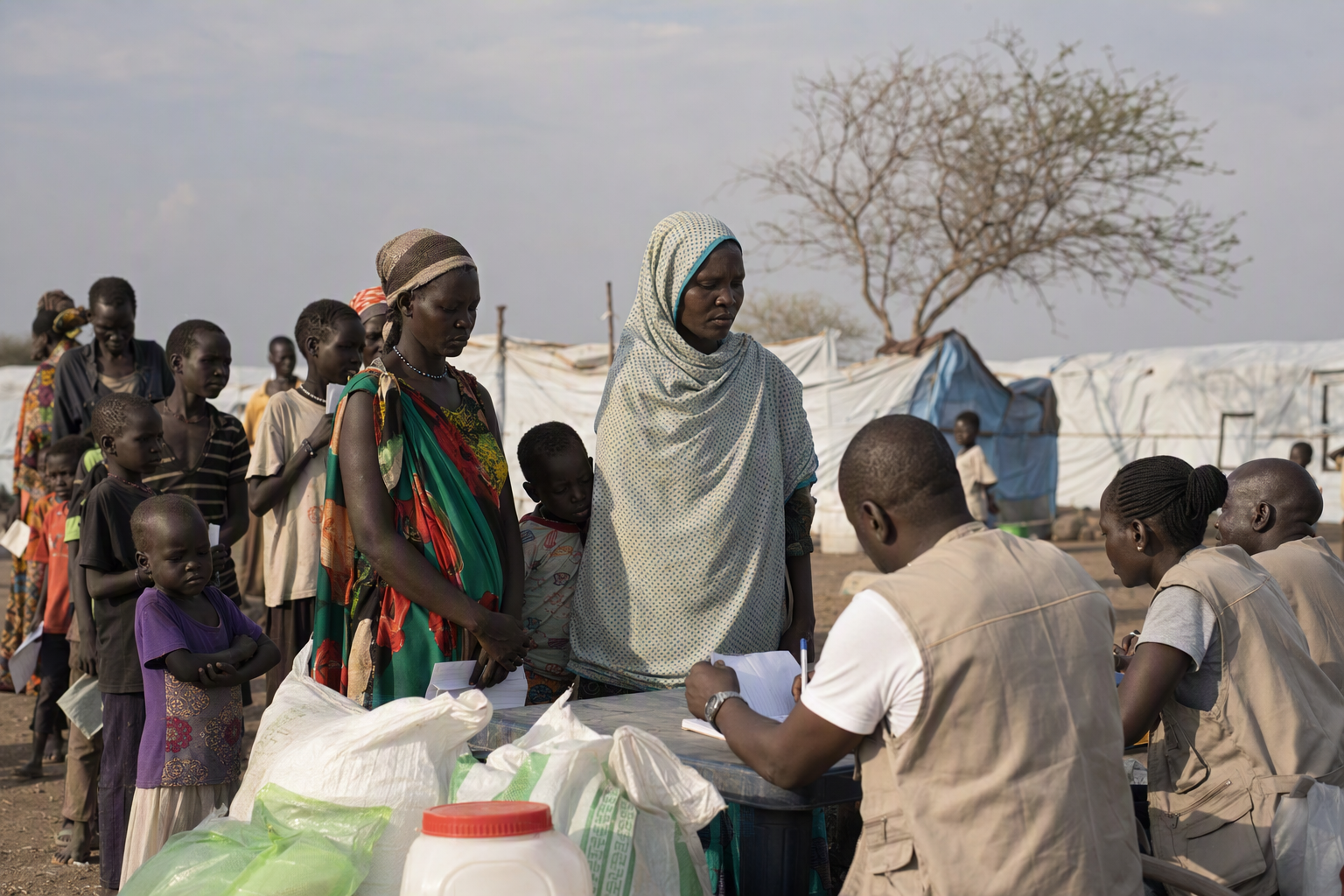
U.N. agencies warn that more than 650,000 refugees and asylum seekers in South Sudan could lose food and nutrition support within weeks as humanitarian funding gaps widen across multiple African crises.
U.N. warning highlights how shrinking humanitarian financing is straining refugee support across multiple crises
More than 650,000 refugees and asylum seekers in South Sudan could lose food and nutrition support within weeks unless new funding arrives, according to a joint warning issued by the World Food Programme and the U.N. refugee agency, UNHCR.
The agencies said on Aug. 14 that food assistance for refugees in South Sudan could stop from October without urgent funding. They also said the last planned food and nutrition distributions for the most vulnerable 240,000 refugees were scheduled for September.
The warning points to a wider funding squeeze affecting humanitarian responses for displaced people across Africa.
In South Sudan, WFP said it faces an immediate $37 million shortfall for its refugee response and a broader $258 million gap for the rest of 2026. UNHCR said it had secured about 28% of the $286 million it requires for the year.
Humanitarian pressure is also rising because South Sudan is receiving around 3,000 refugees and returnees a week from Sudan, adding strain to food, health, nutrition and protection services.
Elsewhere in the region, aid agencies are also operating under major financial constraints.
In Sudan, OCHA’s 2026 Humanitarian Needs and Response Plan seeks about $2.9 billion to reach 20.4 million people, underscoring the scale of unmet humanitarian need created by the conflict.
In Cameroon, WFP said on Aug. 12 that Japan contributed $1.25 million to support three months of food assistance for about 13,450 refugees and internally displaced people. Even with that support, the agency said the operation still faces a $43.2 million shortfall from August 2026 to January 2027.
WFP had also warned in April that funding cuts in Cameroon had reduced planned assistance targets by more than 35% and threatened about 600,000 people.
The broader pattern matches warnings from humanitarian analysts that global aid financing remains under pressure even as needs stay high.
OCHA’s Global Humanitarian Overview 2026 and ALNAP’s 2026 humanitarian assistance analysis have both described a difficult funding environment for aid operations. For frontline agencies, that can mean tighter prioritization of life-saving assistance and reduced support for people in prolonged displacement.
UNHCR reported that 117.8 million people were forcibly displaced worldwide by the end of 2025. Against that backdrop, the South Sudan warning reflects a larger challenge for the humanitarian system: available funding is failing to keep pace with persistent and growing displacement needs.
For affected families, the consequences are immediate, with access to food, nutrition and basic protection potentially determined by whether emergency funding arrives in time.
Key takeaways
- WFP and UNHCR say more than 650,000 refugees and asylum seekers in South Sudan could lose food and nutrition support within weeks without urgent funding.
- Refugee food assistance in South Sudan could stop from October, with final planned distributions for the most vulnerable 240,000 refugees scheduled for September.
- WFP reports a $37 million immediate gap in South Sudan’s refugee response, while UNHCR says it has secured about 28% of its $286 million annual requirement.
- Cameroon’s operation still faces a $43.2 million shortfall despite new donor support, while Sudan’s humanitarian plan highlights the scale of unmet need.
- Aid agencies say constrained financing is increasingly affecting support for displaced people across multiple African crises.
Sources
- WFP USA summary of joint WFP/UNHCR warning
- U.S. News / Reuters report on South Sudan funding squeeze
- OCHA Sudan Humanitarian Needs and Response Plan 2026 summary
- WFP on Japan contribution to Cameroon response
- WFP April Cameroon funding warning
- OCHA Global Humanitarian Overview 2026
- ALNAP Global Humanitarian Assistance report 2026
- UNHCR Global Trends 2025